
 English
 日本語
 한국어
 Dansk
 Nederlands
 Italiano
 Español
 Árabe
 Português
 Türkçe
 Deutsch
 Русский
 Français
 Prancis
 ไทย
 Tiếng Việt
 हिंदी
 বাংলা

A Study on Amino Acid Metabolism and Supply-Demand in CHO Cell Culture
CHO cells are the core host for the production of monoclonal antibodies and recombinant protein therapeutics; whilst amino acids are the most essential components of the culture medium, ‘more is not necessarily better’. Insufficient levels lead to starvation and growth arrest; excessive levels result in toxic by-products, a surge in osmotic pressure, and directly impact antibody quality (sequence variants, charge variants, aggregation and fragmentation). This landmark review systematically examines amino acid metabolism in CHO cells, the supply-demand imbalance, process challenges and solutions, providing a comprehensive framework for culture medium development and the optimisation of feed strategies.
I. Amino Acids: More Than Just Protein Building Blocks—They Are the Cell’s ‘Energy and Signalling Hub’
Amino acids play a triple role in CHO cells:
1. As anabolic substrates for the synthesis of endogenous proteins and therapeutic recombinant proteins; Certain CHO strains exhibit specific nutritional deficiencies (cysteine, proline, arginine, tyrosine; some CHOK1SV strains require asparagine), necessitating exogenous supply.
2. As catabolic carbon sources, glutamine and asparagine enter the TCA cycle in large quantities to replenish energy; during the exponential growth phase, 30 50 per cent of carbon supply during the exponential growth phase comes from amino acids; energy is not derived solely from glucose.
3. Signalling and homeostasis regulation: regulation of the mTORC1 and autophagy pathways, glutathione-mediated antioxidant defence, one-carbon metabolism (folate cycle, DNA methylation), lipid synthesis, nitric oxide synthesis, etc.
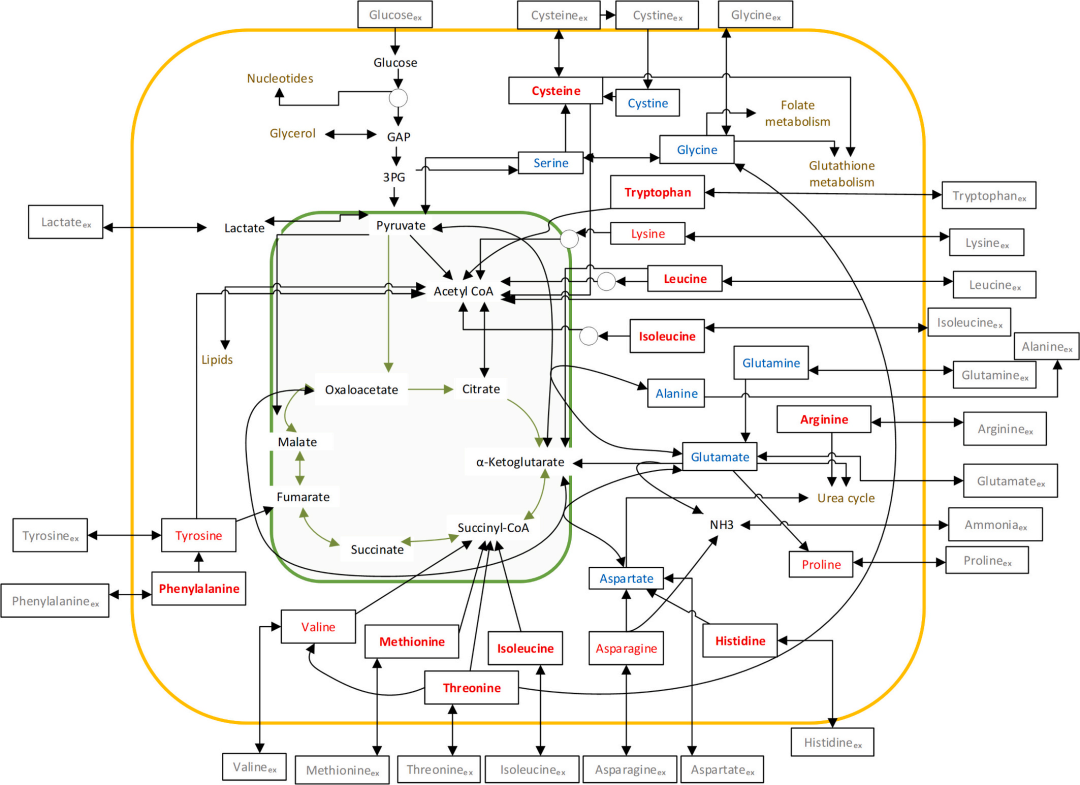
Figure 1: Schematic diagram of the core amino acid metabolic network in CHO cells (red: essential amino acids; blue: non-essential amino acids; green boxes represent the TCA cycle; yellow lines indicate the intracellular–extracellular boundary. Amino acids are utilised not only for protein synthesis but also enter the TCA cycle in large quantities to participate in energy metabolism.)
II. Under the fed-batch process, amino acid requirements vary dynamically
The fed-batch process is the mainstream industrial method; as cells progress from the growth phase to the production (steady-state) phase, their amino acid requirements change significantly.
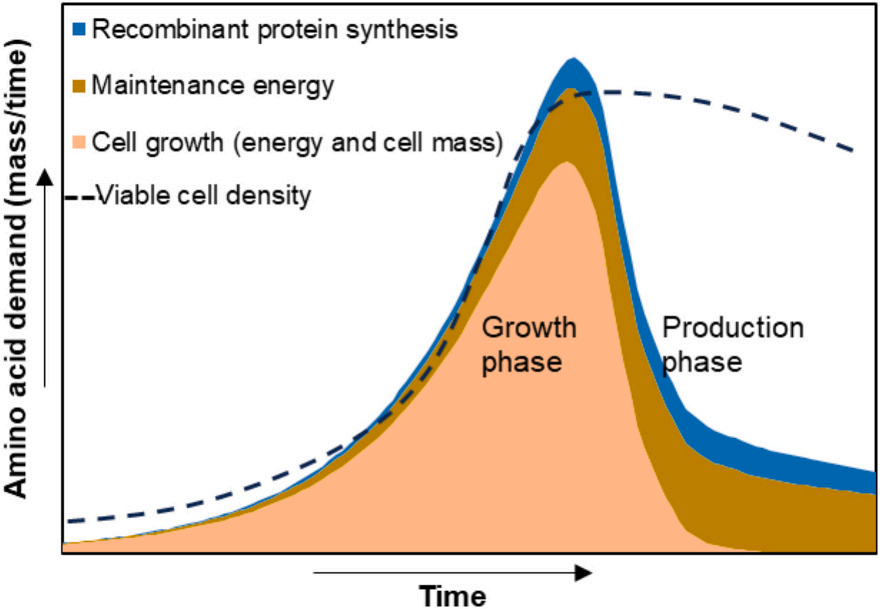
Figure 2|Schematic diagram illustrating changes in amino acid requirements in a typical batch CHO culture with feed addition
Amino acid requirements can be broken down into three categories: recombinant protein synthesis, maintenance energy, and cell growth (substrates + energy).
· During the growth phase, cells proliferate rapidly, and total amino acid requirements rise exponentially with live cell density; large quantities are utilised for cell biomass synthesis and replenishing the TCA cycle;
· During the production phase (steady state), cell proliferation ceases and amino acid consumption shifts towards recombinant protein synthesis and cellular maintenance; the specific amino acid consumption per cell decreases, but the total demand remains substantial.
Metabolic shifts in carbon source preference occur at different stages:
· Early exponential phase: glucose, glutamine and aspartamide jointly supply the TCA cycle;
· Upon entering the production plateau phase: cells utilise glucose and lactate to a greater extent for energy, whilst amino acids are directed more towards the synthesis of products such as monoclonal antibodies.
A common misconception: whilst the amino acid composition of the protein product influences total amino acid consumption, the consumption associated with cell growth and maintenance accounts for the lion’s share (80–90%) of total amino acid consumption; therefore, feed formulations must not be designed based solely on the amino acid composition of the monoclonal antibody.
III. Four Major Practical Constraints Hindering the Development of Amino Acid Formulations
It is not enough simply to calculate the theoretical consumption; this review summarises four major practical constraints, which are also the most vexing challenges in medium development:
1️⃣ Toxicity of amino acids and their degradation by-products
Excessive addition of amino acids may cause the cells to be inhibited by the amino acids themselves or their metabolic degradation products:
· The degradation of branched-chain amino acids (leucine, isoleucine, valine) produces short-chain fatty acids (isovaleric acid, isobutyric acid, etc.), which inhibit histone deacetylases and arrest the cell cycle;
· Arginine metabolism produces N-acetyltetramethylamine; tryptophan metabolism produces 5-hydroxyindoleacetaldehyde; excessive cysteine induces oxidative stress;
· The accumulation of TCA cycle intermediates such as ammonia, malic acid and fumaric acid represents a metabolic bottleneck, inhibiting cell viability;
It is not the case that ‘the more you supplement, the higher the yield’; excessive supplementation actually reduces live cell density and titre, whilst simultaneously inducing product quality defects.
2️⃣ Solubility and stability challenges (the primary obstacle to concentrated feed supplements)
Tyrosine, cysteine and leucine have extremely low solubility at neutral pH, making them highly prone to precipitation when formulated into highly concentrated feed solutions; cysteine is highly susceptible to oxidation into insoluble cystine, whilst light exposure alone can degrade tryptophan and tyrosine. Common industrial solutions include:
· Raising the pH to improve solubility, but this causes an instantaneous pH shock upon introduction into the reactor;
· Using dipeptides and amino acid derivatives (glycyl-L-tyrosine GY, sulphonylcysteine S, sodium tyrosine phosphate), which exhibit high solubility at neutral pH and avoid the risk of precipitation; this is currently a popular approach in process optimisation.
3️⃣ The double-edged sword of osmotic pressure
The addition of large quantities of amino acids raises the osmotic pressure of the system; excessively high osmotic pressure damages cells. However, certain amino acids (proline, alanine, glycine) can act as compatible solutes, alleviating hyperosmotic stress, so a balance between the pros and cons must be struck. The osmotic pressure in the final tank can reach 400 520 mOsm/kg, with amino acids contributing 5–10% of the osmotic load.
4️⃣ Transporters Determine Actual Intracellular Availability
Medium concentration ≠ intracellular concentration! Amino acids are taken up via membrane transporters, and competitive inhibition occurs:
For example, alanine competitively inhibits proline uptake; cysteine uptake depends on the reverse exchange of intracellular glutamate, and the two compete with one another. Transporter expression is dynamically regulated by nutrients, pH and temperature, directly altering amino acid uptake efficiency. Even at the same extracellular concentration, different transporter levels result in completely different intracellular supplies—a factor often overlooked in many formulation developments.
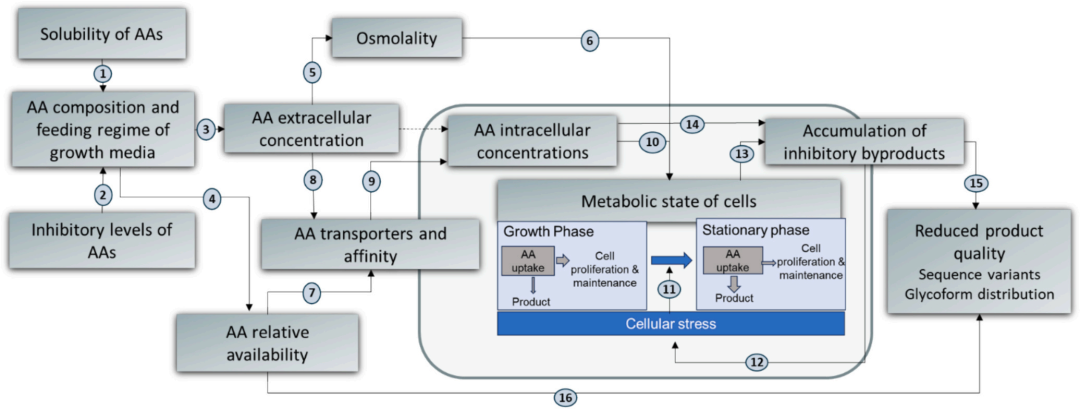
Figure 3|A complete causal logic diagram illustrating the balance between amino acid supply and demand
From amino acid solubility and inhibitory concentrations, through medium formulation and feed strategies → extracellular amino acid concentrations; then via transport competition → intracellular amino acid levels; this determines the cellular metabolic state, leading to the production of inhibitory by-products, which ultimately exert a feedback effect on cellular state and protein product quality (sequence variants, glycosylation profiles), forming a complete closed loop.
IV. Amino Acid Imbalance Directly Alters Key Quality Attributes (CQAs) of Monoclonal Antibodies
Many quality issues stem from abnormalities in amino acid supply: Sequence variants: Depletion of tyrosine and proline leads to amino acid misincorporation; insufficient aspartamide causes serine misincorporation; abnormal cysteine levels result in trisulphide bond modifications; Charge variants: Excess arginine/lysine inhibits carboxypeptidase, leading to the accumulation of C-terminal lysine variants; a lack of tyrosine downregulates carboxypeptidase, which similarly amplifies lysine variants; Aggregation and fragmentation: Tyrosine depletion alters extracellular redox conditions, increasing antibody fragment levels; an appropriate amount of cysteine can reduce aggregation; Glycosylation profiles: Valine, threonine, proline and other amino acids regulate glycosylation pathways, altering the proportions of sialylation and fucosylation.
V. How to break the deadlock? Technical approaches to balancing amino acid supply and demand
This review summarises current mainstream strategies, categorising them into four major directions: culture medium strategies, genetic engineering, model-driven approaches, and supplement strategies:
Culture medium and supplement strategies
1. Synergistic optimisation of the base medium and feed medium is required; optimising the base medium alone is insufficient;
Comparison of feed modes: fixed-volume pulsed feeding, staged feeding, continuous feeding, and model-based dynamic feeding; dynamic feeding can track actual cellular consumption, but its widespread adoption on an industrial scale is still hindered by hardware and online monitoring limitations.
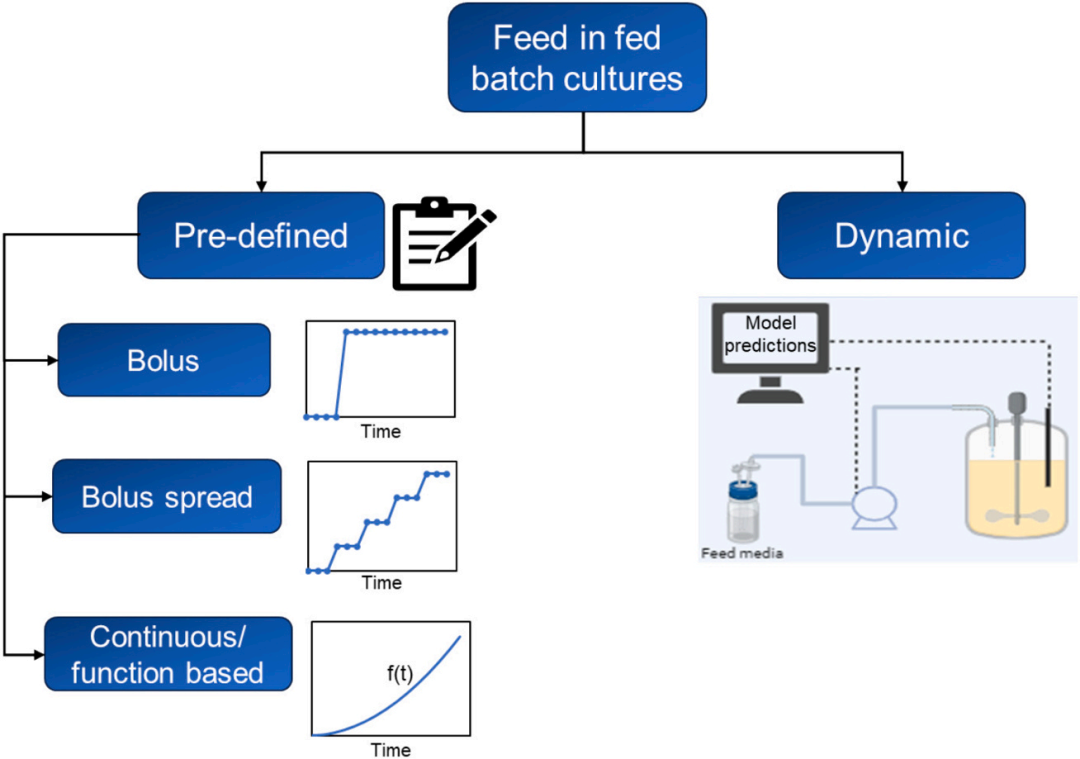
Figure 4|Overview of various feed strategies for batch culture with feed addition (divided into [Pre-set Schemes]: single large pulse, segmented pulses, and continuous functional feed addition; [Dynamic Feed Addition]: real-time adjustment of feed addition based on online monitoring combined with model prediction, representing the future direction of digital biomanufacturing.)
Metabolic Engineering of Cell Lines
1. GS CHO and double-knockout GS+ASPG (asparaginase) screening systems;
2. Reconstruction of nutrient deficiency pathways: enabling CHO cells to autonomously synthesise cysteine, tyrosine and valine, thereby reducing dependence on exogenous amino acids;
3. Knockout of key enzymes involved in by-product formation (BCAT1, BCKDH) to reduce the production of toxic short-chain fatty acids and improve cell performance.
Model-driven: From trial and error to rational design
1. Genome-scale metabolic model (GEM) to analyse amino acid flux under different conditions;
2. Flux-based analysis (FBA) and dynamic FBA; combined with machine learning hybrid models to address the shortcomings of purely mechanistic models;
3. Challenge: Existing models inadequately capture the competitive effects of amino acid transporters, requiring further experimental data for calibration.
Analysis and Online Monitoring
· Current situation: The industry relies heavily on offline HPLC and mass spectrometry for amino acid analysis, resulting in significant time lags;
· Future direction: Raman spectroscopy and biosensors to enable online or near-online amino acid monitoring, supporting the implementation of dynamic feed supplementation.
References
Bhagya S. Yatipanthalawa, et al. Amino acid metabolism, demand and supply in Chinese Hamster ovary cell culture – A comprehensive literature review. Biotechnology Advances, 2026, 89, 108866.
